


01
The problem
In a store, choosing glasses takes a minute: put a pair on, look in the mirror, try the next one. Online, that minute disappears. The shopper is left guessing whether a frame that looks right on a model will look right on them.

When the guess is wrong, the frames come back. A return costs shipping both ways and the time to inspect and restock, and a customer who guessed wrong once may not try again. So the question for an eyewear brand isn't only "does the page look beautiful?" It's "can a stranger tell whether this frame will fit?"
02
The numbers already exist
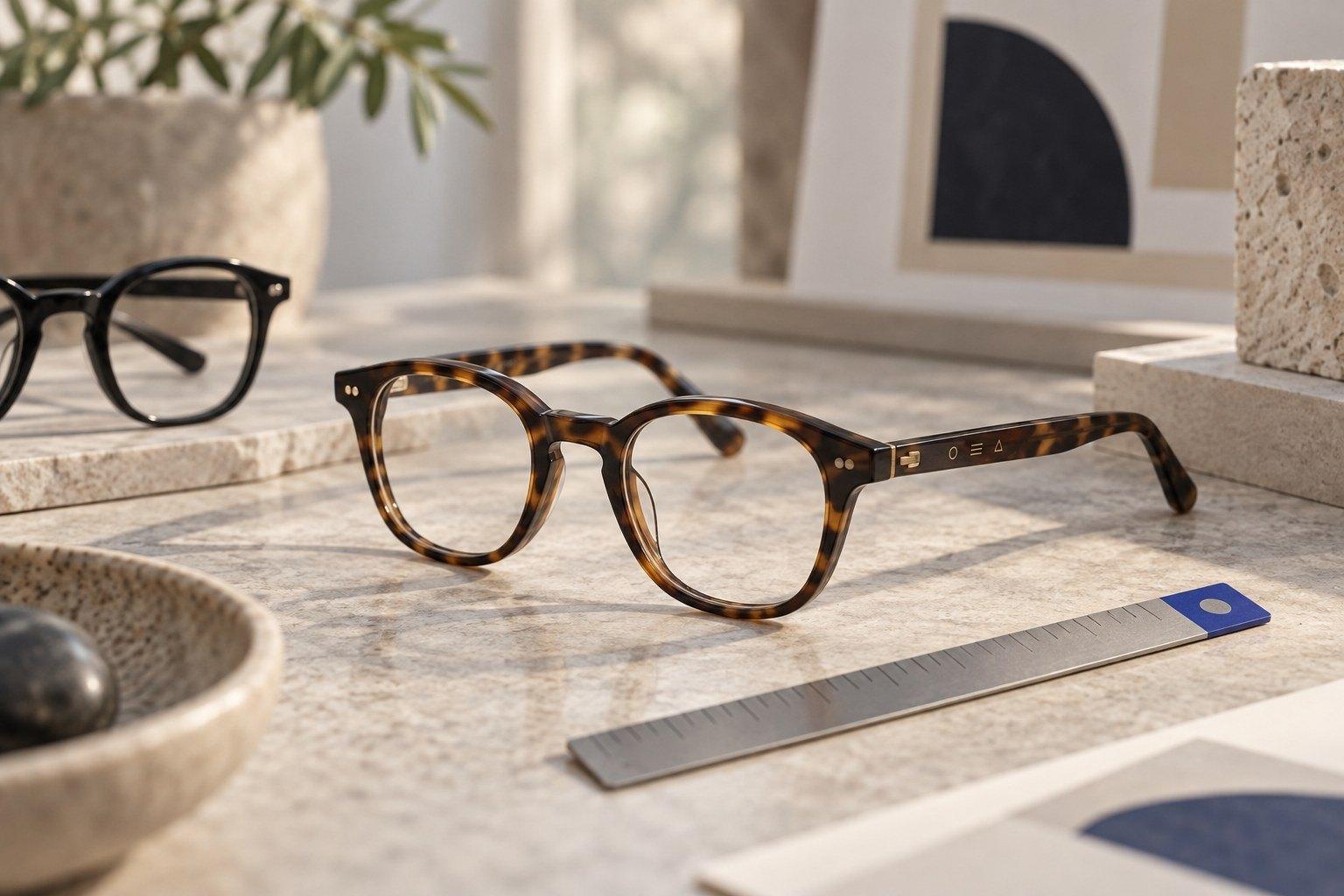
Almost every frame carries three numbers printed on the inside of an arm, something like 52 □ 18 – 145. They are the lens width, the bridge width (the gap between the lenses that sits on your nose) and the temple length (the arm), all in millimeters.
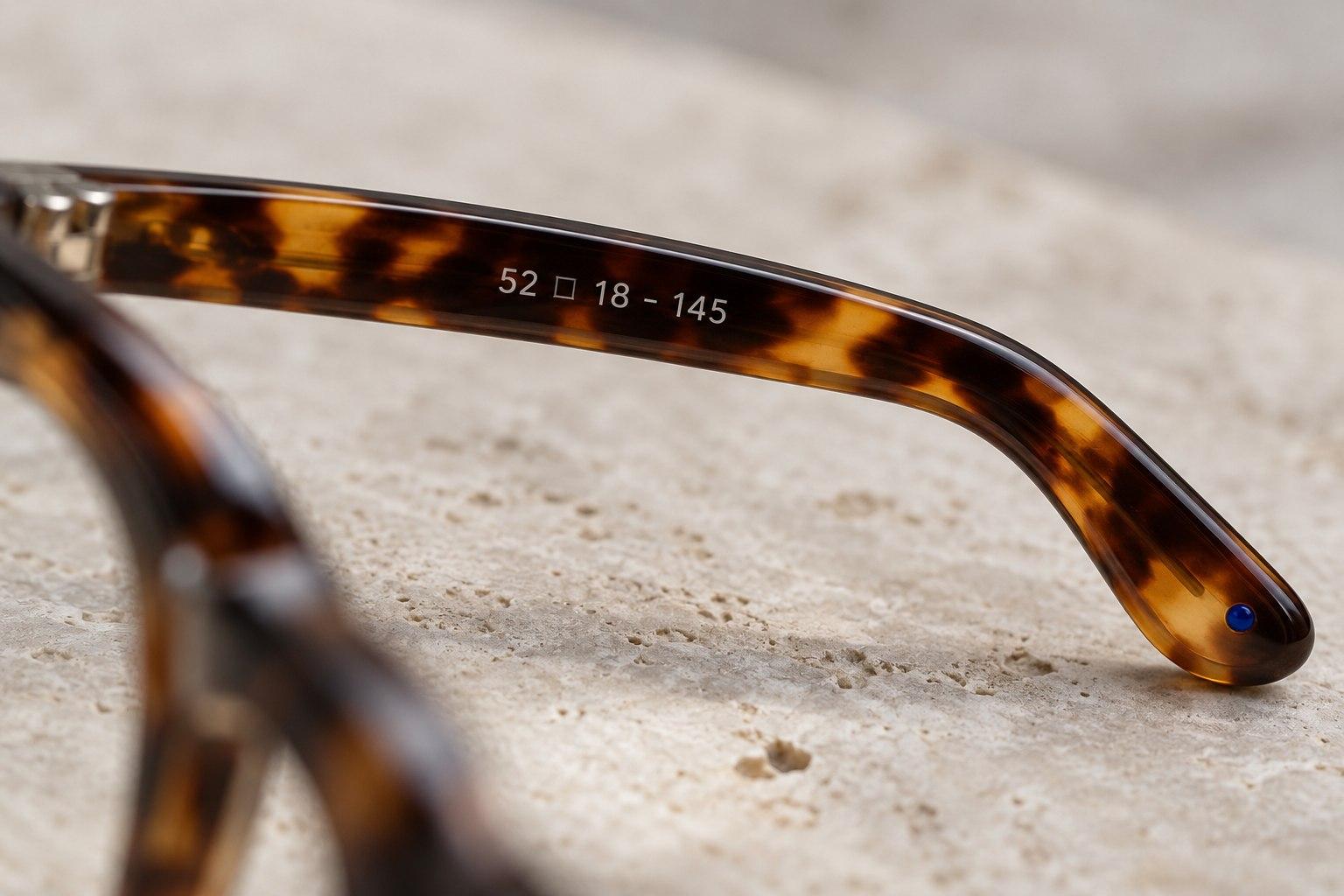
Most shoppers have never noticed them. That's an opportunity. A product page that shows these numbers, and tells the shopper to compare them with a pair they already own and like, turns a guess into a quick check.
- Show all three numbersPlus the total frame width if you have it, which is the easiest single number for a shopper to compare.
- Explain how to use themOne sentence: "Find these numbers inside the arm of glasses you already wear. Within 2 to 3 millimeters is a similar fit."
- Group by fitLet shoppers filter a collection by narrow, medium and wide, so they only browse frames that can fit.
03
Photography that answers questions
Campaign photography sells the feeling. Fit photography answers the question. The two jobs need different pictures.
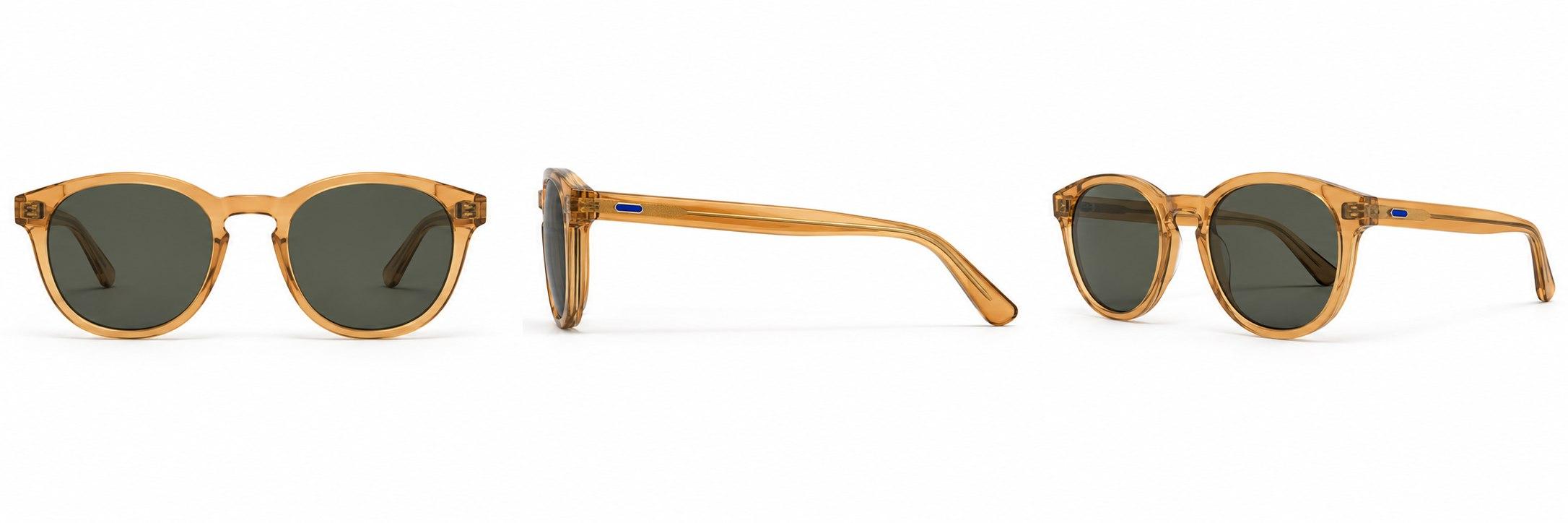
The most useful set shows each frame on more than one face, straight on and from the side, at the same distance every time. Consistency matters more than polish: if every frame is shot the same way, a shopper can compare them side by side and see how wide or tall one runs against another.
04
Where virtual try-on fits
Virtual try-on tools, which place frames over a live camera image of the shopper's face, are good at one thing: showing style. Does this shape suit me? Does this color work with my skin tone?

They are less reliable at showing size, because a phone camera doesn't know how far away your face is. Treat try-on as a way to shortlist styles, and the measurements as the way to confirm fit. A brand that offers both, and explains which does what, gives the shopper the whole picture.
05
What to do next
If you sell eyewear on Shopify, most of this is setup rather than new software. The measurements can live in product metafields (extra labeled fields on each product), so they show up on every product page in the same place and can drive a fit filter on your collections. The instruction to compare with your own glasses is one line of copy. The photography is a shot list you give your photographer.
We work with eyewear brands including Lorvae and 12PM Studios. Their stories are in Insights alongside this piece.